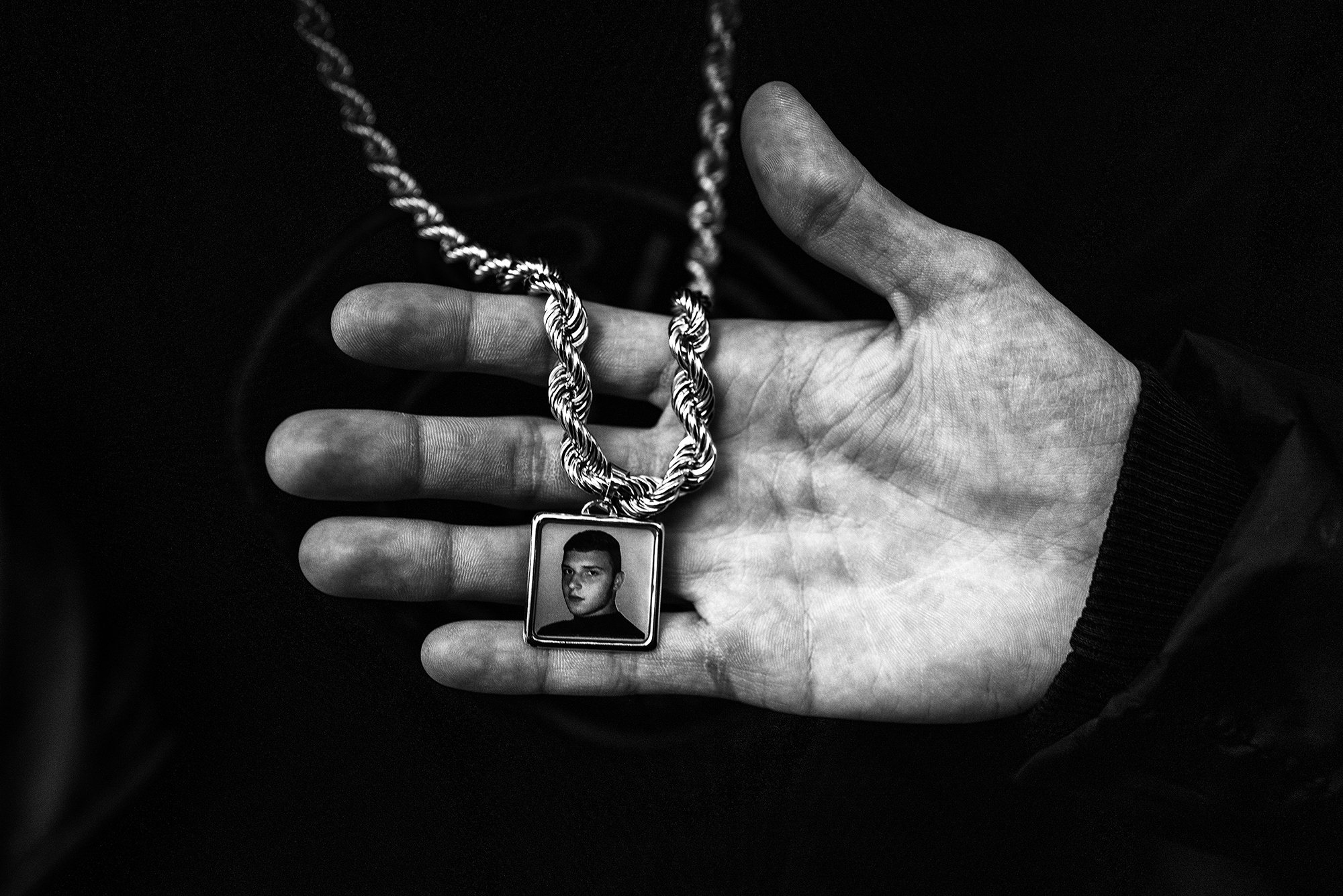
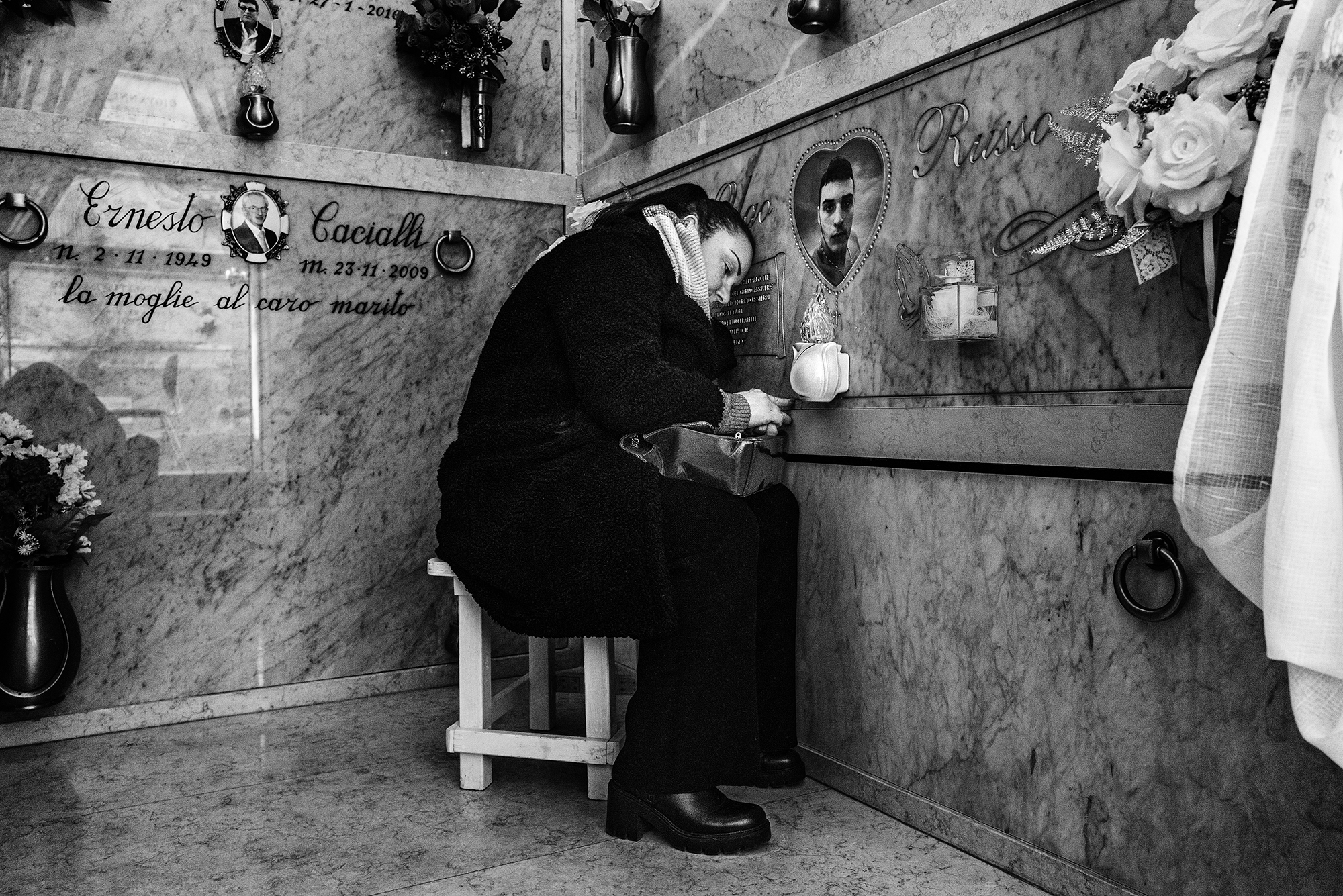
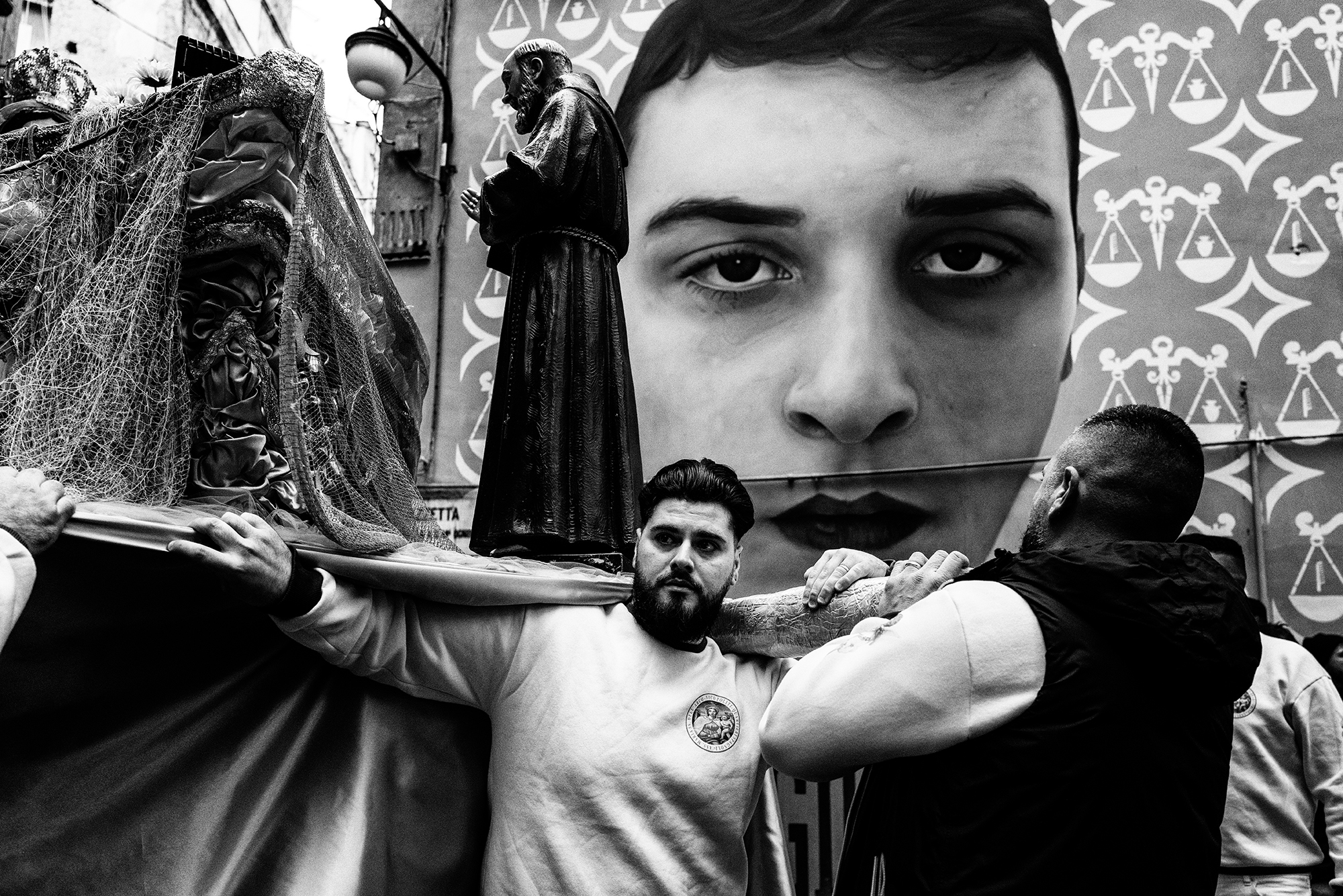
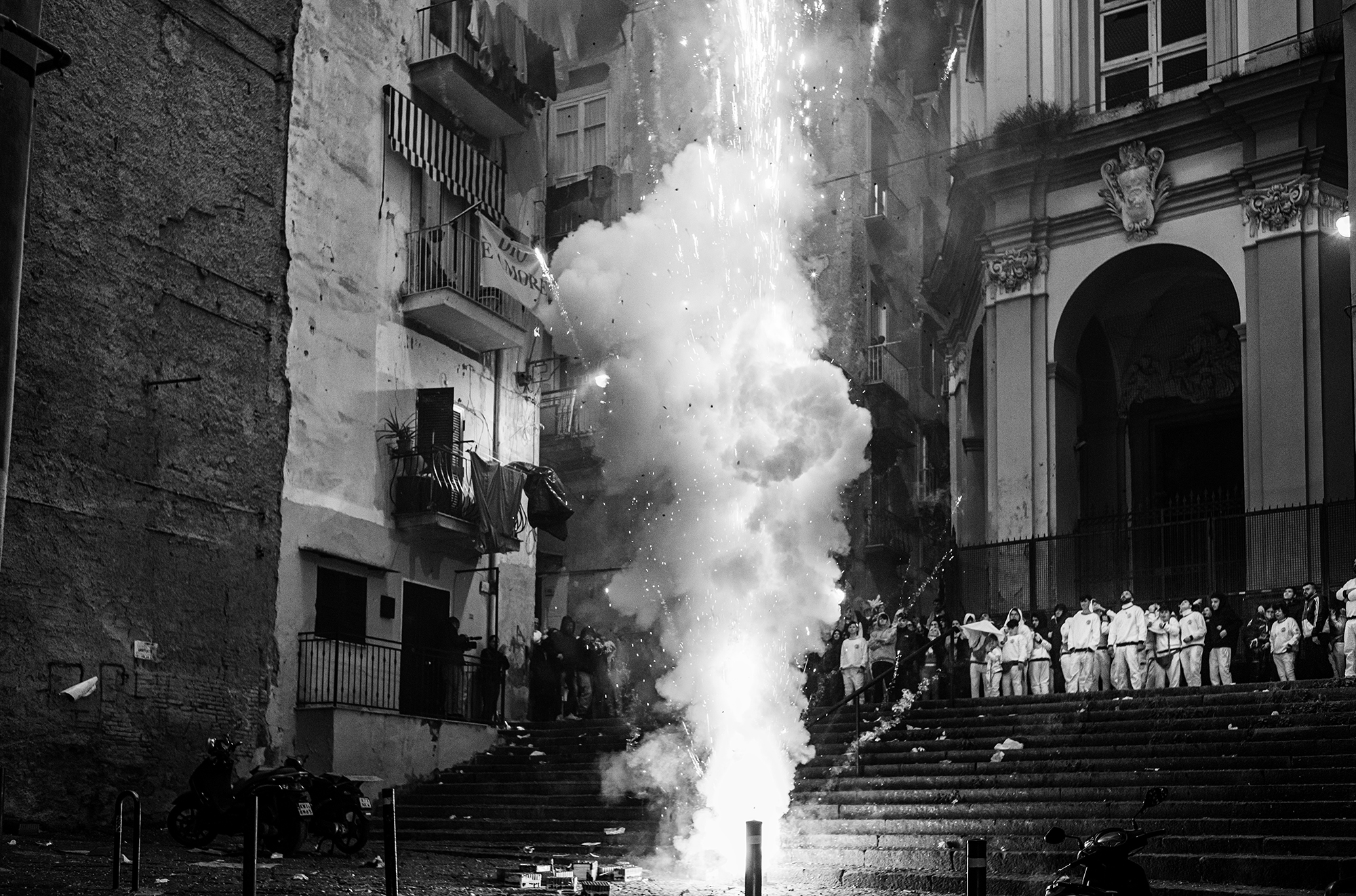
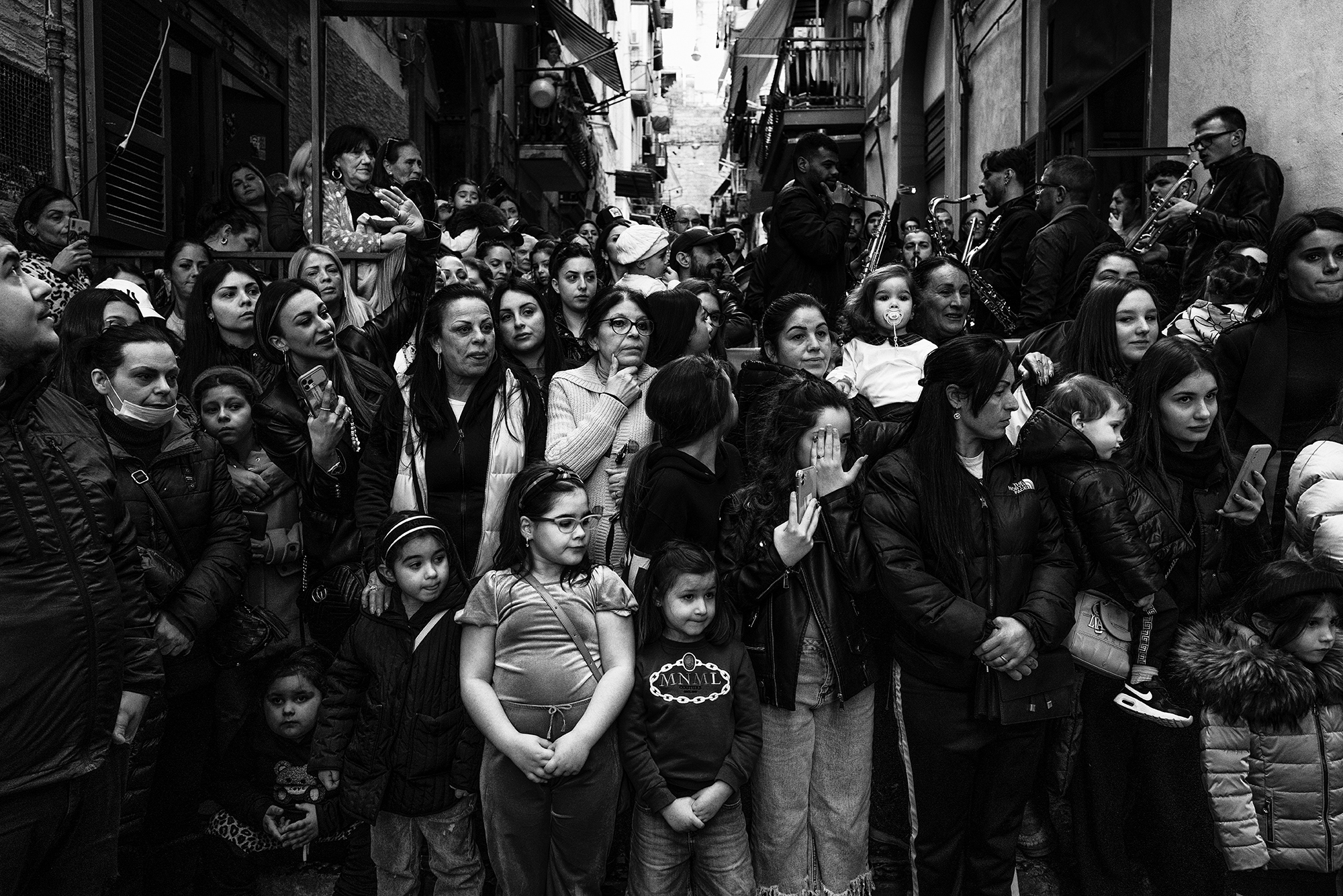
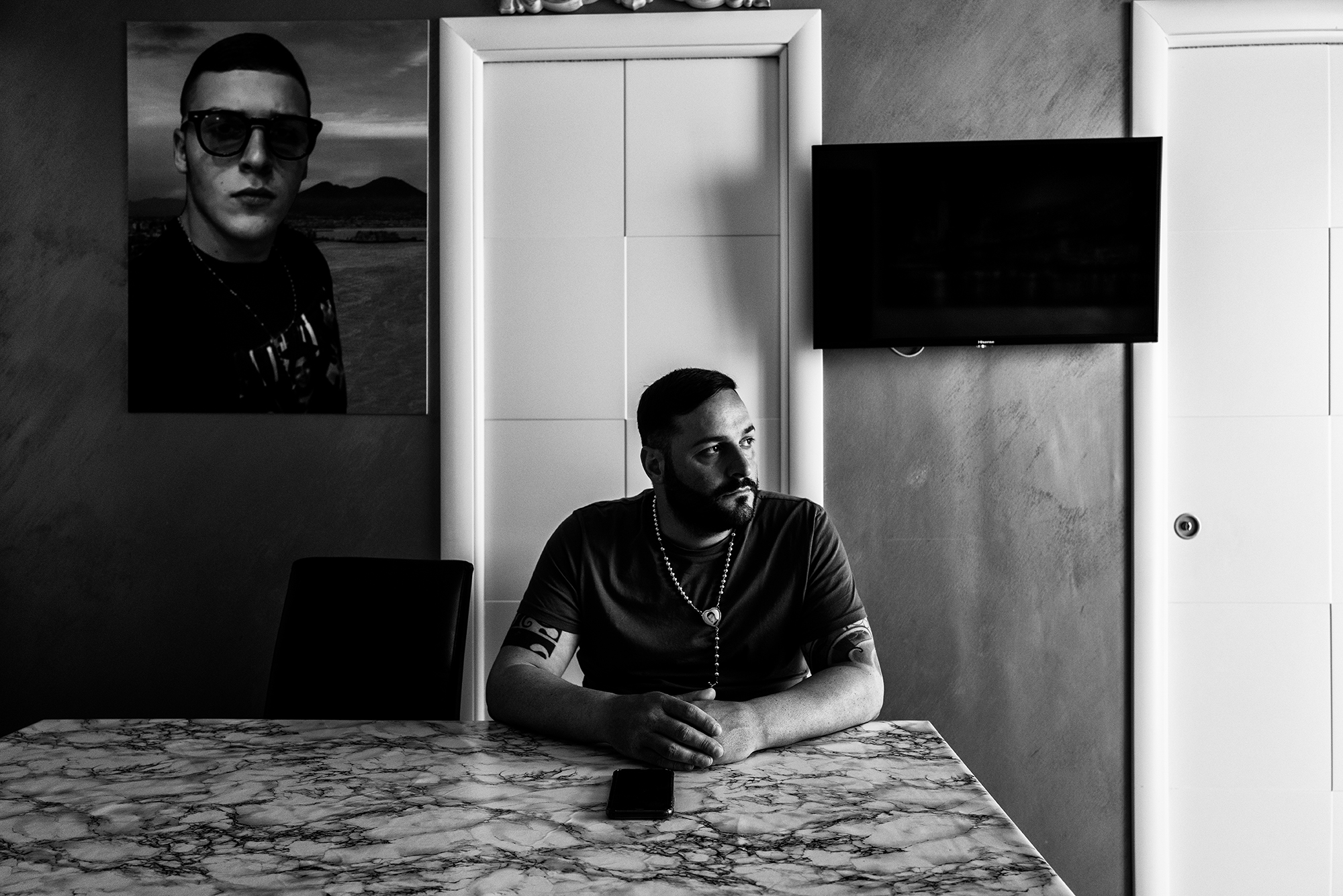
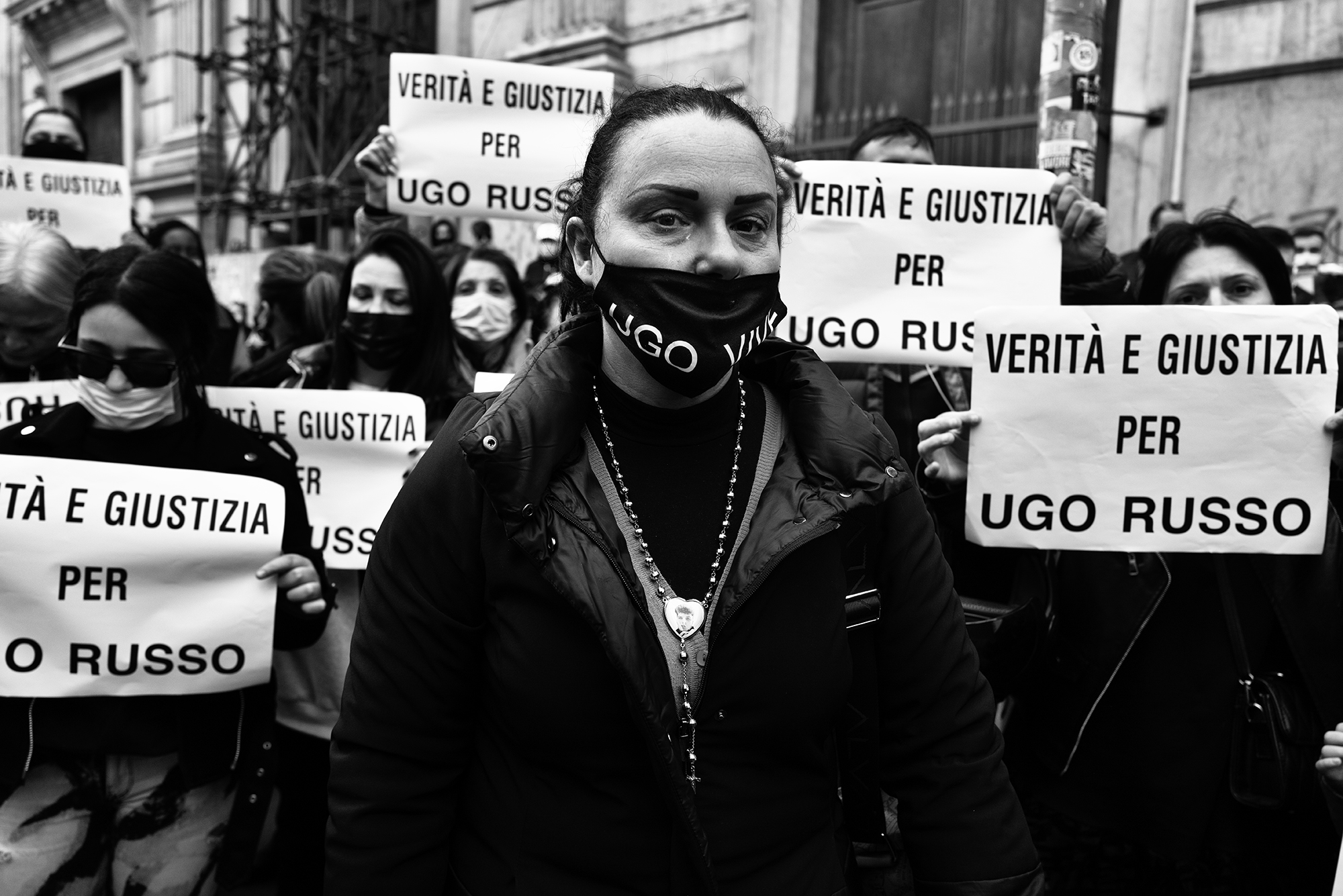
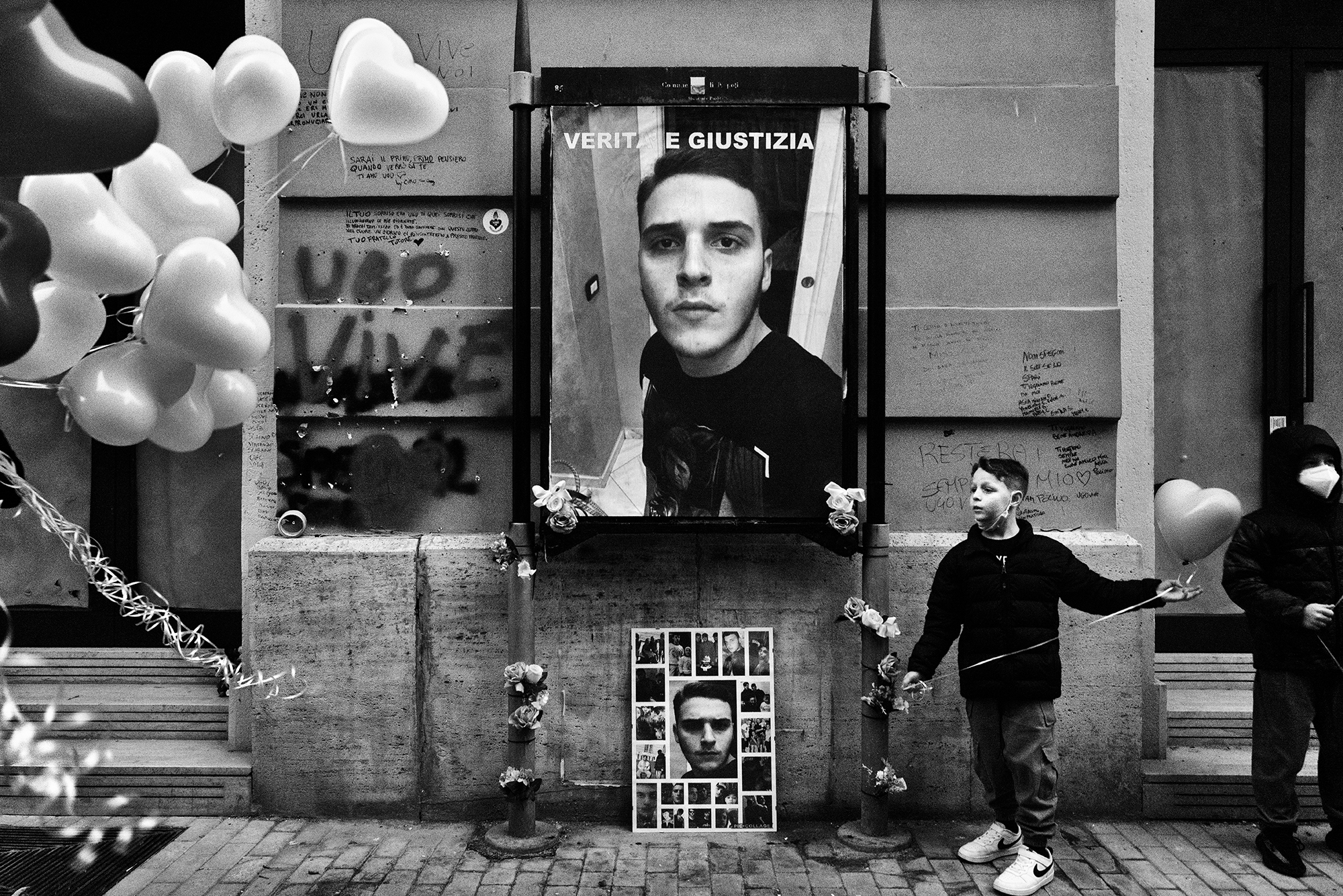
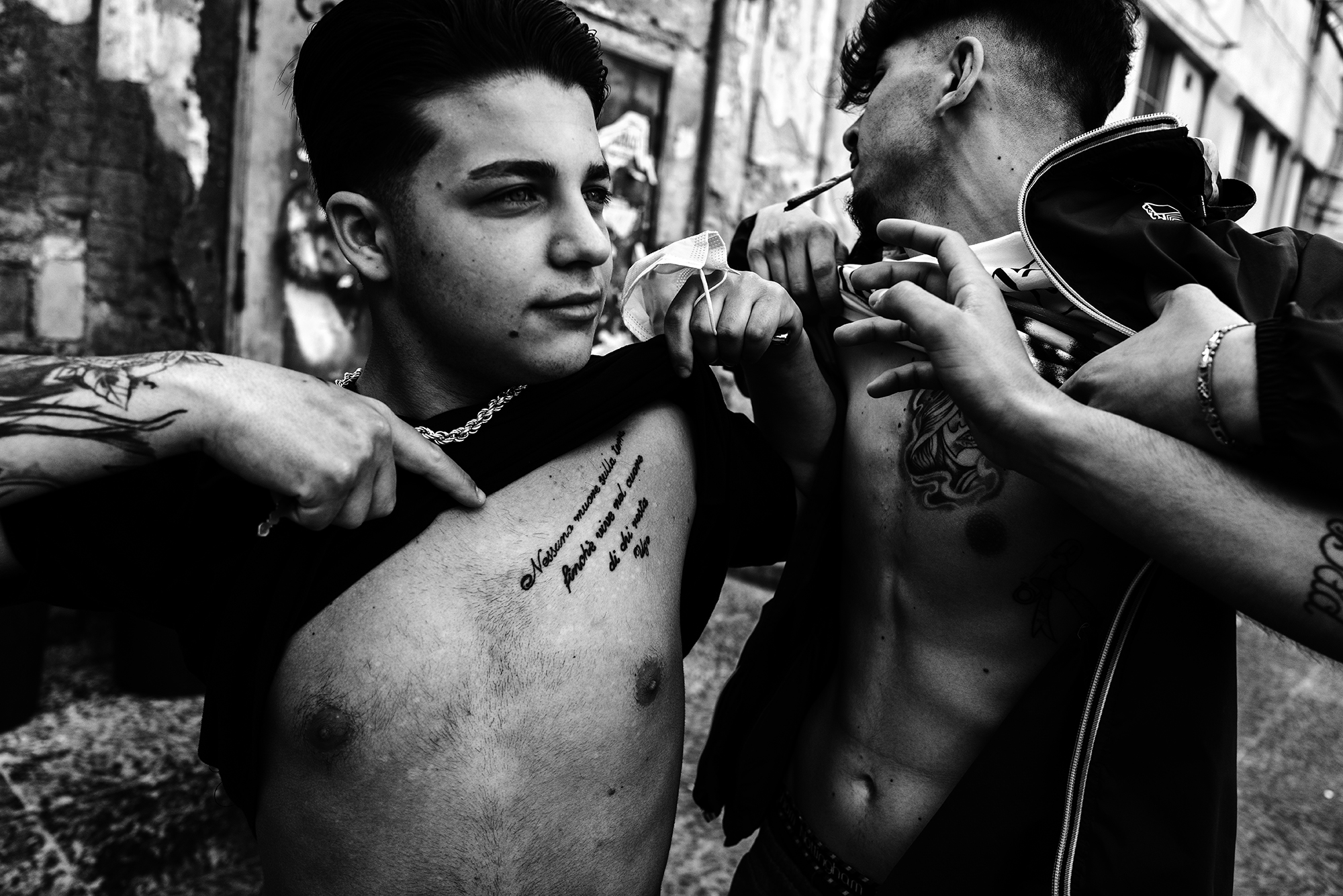
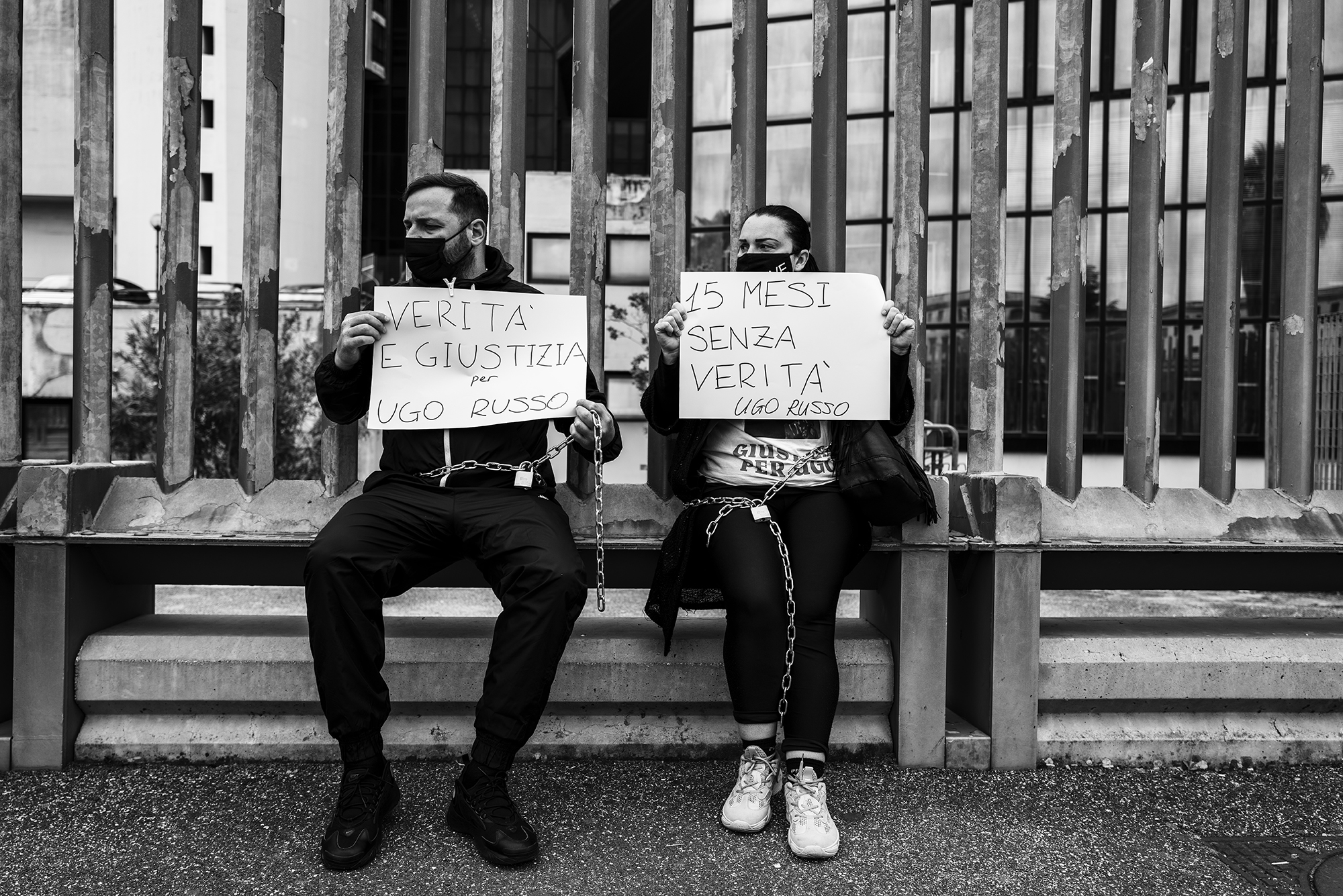
On the night of February 29, 2020, a day already special in itself as it is linked to leap, Ugo Russo, a 15-year-old boy from the Spanish Quarters, was on the street with a toy gun looking for an alternative way to make money. A bad idea, like so many others in a neighborhood where, with no work and a high rate of illiteracy, it will cost him his life. It is the end of a straight line between two points that connects life and death, but at the same time, it is also the beginning and the end of a bad decision in a place that does not forgive these kinds of mistakes. That night Ugo got on a friend’s scooter and crossed the narrow streets of the city center up to S. Pasquale in Chiaia where he was shot by a man, in a car with his girlfriend, who was attempted a robbery. The two boys tried to rob the 23-year-old’s Rolex, who subsequently turned out to be an off-duty policeman, who drew his gun and fired five shots at them, three of which hit Ugo – two in the chest and one in the neck as he was trying to run away. Although a year has already passed, there is no further news of what happened that night. There is no autopsy or clear convictions. And his face, like that of many other boys killed in fights or with the police, presides over one of the corners of the center. Naples has always been a European anomaly, a fabulous trench against globalization and the homogenization of the world. It is not advisable to look here for aesthetic or cultural deductibles of what happens in other large cities. Most of the center, unlike that of the main cities, was never conquered by the bourgeoisie. In many ways it now has a more Central American than Mediterranean social configuration, more like a “favela” than a historic center. The cursed certification, that phenomenon whereby the popular classes were expelled from their homes in the center of the cities to transform them into places of residential or tourist privilege, is here an entelechy and “Quartieri Spagnoli”, perhaps the most paradigmatic district in the center of Naples, is the best expression of how it is possible to build an island within another island.
Ugo Russo lived on the second floor in a small street in the neighborhood, very close to Montesanto.
He had three brothers: one older and two younger. He decided to stop studying. He started doing more humble and disparate jobs: from delivering tomatoes to the bricklayer. The center of Naples, a city of just one million inhabitants, has borders for many young people who do not dare to cross from one street to another just because the name of the neighborhood changes. And many of the youth gangs have grown up in recent years in this kind of social “jihadism”. An aspiration to martyrdom that was born more from the lack of interest in an earthly life than from the ambition of a shining afterlife.
Ugo Russo had the misfortune of dying in that chiaroscuro where monsters are born. In a place in the city where you run the risk of easily becoming a symbol.
Even now his family won’t be able to remind him every year in a city that he needs to celebrate his dead as much as he gives to live.
And the murals, the chapels, are the only way to do it on a daily basis. Especially when you leave in a leap year.
La notte del 29 febbraio 2020, un giorno già di per sé particolare in quanto legato alla bisestilità, Ugo Russo, un ragazzo di 15 anni dei Quartieri Spagnoli, era in strada con una pistola giocattolo cercando un modo alternativo per fare soldi. Una pessima idea, come tante altre in un quartiere dove, con assenza di lavoro e un alto tasso di analfabetismo, gli costerà la vita. È la fine di una linea retta tra due punti che unisce vita e morte, ma allo stesso tempo, è anche l’inizio e la fine di una decisione sbagliata in un luogo che non perdona questo tipo di errori.
Ugo quella notte salì sullo scooter di un amico e attraversarono le strette vie del centro città fino a S. Pasquale a Chiaia dove gli fu sparato da un uomo in auto con la sua fidanzata dove fu tentata una rapina. I due ragazzi cercarono di rapinare il Rolex del 23enne della coppia, rivelatosi essere un carabiniere fuori servizio, il quale estrasse la pistola e sparò contro di loro cinque colpi, Tre dei quali colpirono Ugo – due al petto e uno al collo mentre si dava alla fuga. Nonostante sia già trascorso anno non si hanno ulteriori notizie di ciò che accadde quella notte. Non c’è autopsia o condanne chiare. E il suo volto, come quello di tanti altri ragazzi uccisi nelle risse o con la polizia, presidia uno degli angoli del centro.
Napoli è sempre stata un’anomalia europea, una favolosa trincea contro la globalizzazione e l’omogeneizzazione del mondo. Non è consigliabile cercare qui franchigie estetiche o culturali di ciò che accade in altre grandi città. La maggior parte del centro, a differenza di quello delle principali città, non fu mai conquistata dalla borghesia. Per molti versi ora ha una configurazione sociale più centroamericana che mediterranea, più simile a una favela che a un centro storico. La maledetta certificazione, quel fenomeno per cui le classi popolari venivano espulse dalle loro case nel centro delle città per trasformarle in luoghi di privilegio residenziale o turistico, è qui un’entelechia. E Quartieri Spagnoli, forse il quartiere più paradigmatico del centro di Napoli, è la migliore espressione di come sia possibile costruire un’isola dentro un’altra isola.
Ugo Russo abitava al secondo piano in una stradina del quartiere, vicinissimo a Montesanto. Aveva tre fratelli: uno più grande e due più piccoli. Ha deciso di smettere di studiare. Facendo mestieri più umili e disparati: dal consegnare pomodori al muratore. Il centro di Napoli, città di appena un milione di abitanti, ha confini per tanti ragazzi che non osano attraversare da una strada all’altra solo perché cambia il nome del quartiere. E molte delle bande giovanili sono cresciute negli ultimi anni nel calore di questo tipo di jihadismo sociale. Un’aspirazione al martirio che nasceva più dal disinteresse per una vita terrena che dall’ambizione di un aldilà splendente.
Ugo Russo ha avuto la sfortuna di morire in quel chiaroscuro dove nascono i mostri. In un luogo della città dove si corre il rischio di diventare facilmente un simbolo. Hai preso la decisione sbagliata in un giorno che compare solo ogni quattro anni. Anche ora la sua famiglia non sarà in grado di ricordargli ogni anno in una città che ha bisogno di celebrare i suoi morti tanto quanto si dà per vivere. E i murales, le cappelle, sono l’unico modo per farlo quotidianamente. Soprattutto quando parti in un anno bisestile.